
Round Robin for the Grand National: A Different Betting Approach
 Available in US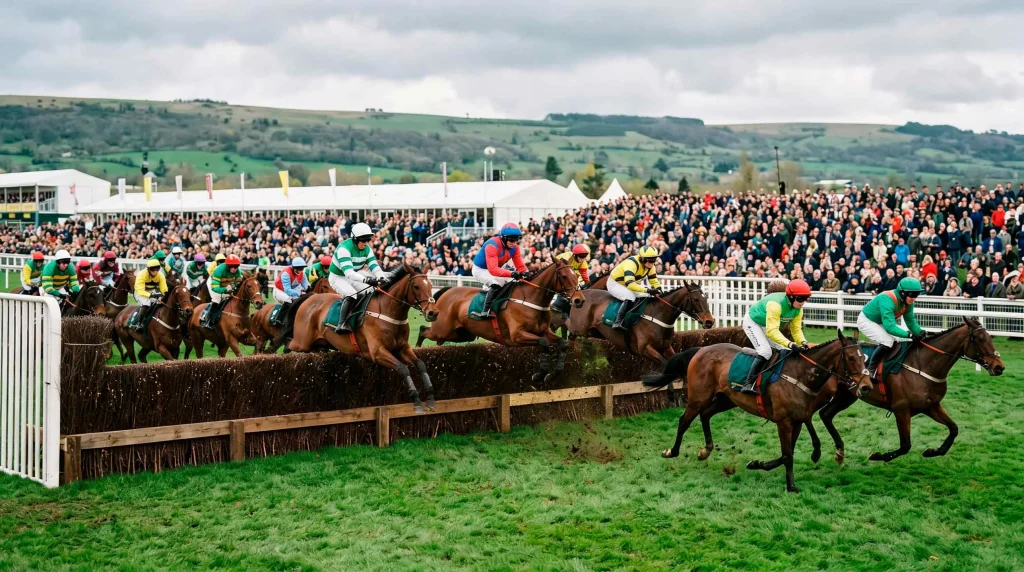
The Grand National is not like other races. Thirty-four runners, the maximum field since 2024 safety reforms. Four miles and two furlongs over thirty fences. A field so large that even specialists struggle to narrow it to a credible shortlist. For many of the millions of people who bet on it each year, it is a once-a-year flutter — a fiver on a name that sounds lucky. For a round robin punter, it demands a different approach entirely.
A round robin on the Grand National does not mean picking three horses from the same race. It means selecting one horse in the National and two from other races on the Aintree card — or from other meetings on the same day. The structure remains the same: ten bets, three selections from three separate races. But the Grand National’s unique characteristics — enormous field, long odds, high non-completion rate — change the calculus of which selections to pair it with and whether the round robin format suits the occasion at all. The nation’s race deserves more than a punt; it deserves a plan.
Round Robin for the Grand National — More on this topic at horse racing round robin.
Grand National Betting Landscape
The Grand National generates more betting turnover than any other single race in Britain. In 2025, the Betting and Gaming Council projected over £200 million in turnover on the race itself, with the three-day Aintree Festival expected to exceed £250 million in total. No other individual event in British sport comes close to that level of betting activity on a single contest.
Grainne Hurst, CEO of the Betting and Gaming Council, has described the Grand National as one of the precious few sporting events capable of uniting the entire nation around a single spectacle — calling it the nation’s punt. That description captures something the numbers alone miss: the National is not just a race but a cultural event, and the betting market reflects that. The majority of wagers come from casual bettors who bet once or twice a year, many of whom have no interest in form analysis or combination bets.
For a round robin punter, this market context matters. The Grand National’s odds are long. The favourite typically sits between 5/1 and 10/1, with the majority of the thirty-four-runner field priced at 20/1 or longer. These are not the moderate, analysable prices that round robins handle best. Selecting a National runner as one leg of a round robin means accepting that the leg is likely to lose — and structuring the other two selections accordingly.
The Aintree Festival runs over three days, with the National on the Saturday. The undercard offers races at a range of distances and field sizes, some with far more predictable outcomes than the big race. A round robin that uses the National as one long-odds leg and pairs it with two shorter-priced selections from Friday’s or Saturday’s undercard can achieve the odds diversity that the bet structure rewards.
Why Round Robin Suits — or Does Not Suit — 34-Runner Fields
A thirty-four-runner field changes the maths of every round robin component. The implied probability of any individual horse winning is low — a 20/1 shot implies roughly 5 percent. Multiply two such probabilities for a double and you get 0.25 percent, or one in four hundred. The treble combining three long-priced National-card runners would need to overcome combined probabilities that make lottery odds look generous.
This is why a round robin built entirely from Grand National-card selections at long odds is structurally inefficient. The treble almost never fires. The doubles fire very rarely. The SSA pairs produce slim returns when they trigger, because the leftover profit from a winning first leg at 20/1 funds a second-leg single on another long shot that will usually lose. The round robin’s partial-return design works best at moderate odds; at extreme odds, it degenerates into a treble with expensive accessories.
The data confirms the National’s unique audience profile. According to Entain figures reported by SBC News, the Grand National attracted over 700 percent more bets than the Gold Cup in 2024. Nearly half of the National’s turnover came from bettors staking £5 or less, and roughly 30 percent were placing their first bet of the year. These are casual punters, not round robin strategists. The round robin is a structured, considered bet — it belongs in the hands of someone who has studied the card, not someone picking a horse because its name matches their birthday.
The more productive approach is to treat the National as one leg of a diversified round robin. Pair your National selection — ideally a horse with genuine credentials, not a 100/1 hope — with two horses from undercard races where fields are smaller and form is more reliable. If the National leg loses, the surviving doubles and SSA pairs between your two undercard selections can still produce a return. If the National leg wins, the treble delivers a headline-grabbing payout boosted by the long odds.
Consider the each-way option carefully in this context. The Grand National pays four places (or sometimes five, depending on the bookmaker’s promotion). An each-way round robin at £1 costs £20 but gives every component a place dimension. If your National selection finishes in the frame at 20/1 with one-quarter place terms, the place return is £6 on a £1 stake — enough to fund the conditional SSA second legs and leave profit behind. At these prices, the each-way variant adds genuine value rather than simply doubling the bill.
Black Market Warning
A note on where you place this bet. The Grand National’s enormous profile has attracted unlicensed operators. The Betting and Gaming Council estimated that around £10 million was wagered illegally on the 2025 Grand National, representing roughly 5 percent of total turnover. Traffic to unlicensed betting sites had risen by 500 percent over three years.
For a round robin punter, unlicensed operators carry specific risks beyond the general dangers of unregulated gambling. The SSA component requires the bookmaker to correctly settle conditional bets — a process that depends on the operator’s systems and integrity. A licensed UK bookmaker regulated by the Gambling Commission is obligated to settle according to published rules. An unlicensed site has no such obligation. If your round robin involves a disputed settlement — a Rule 4 deduction, a non-runner cascade, a voided race — you have no recourse with an unregulated operator.
Stick to licensed bookmakers for any combination bet, and particularly for one as structurally complex as a round robin on Grand National day. The ease of placing the bet is not worth the risk of never seeing a correct settlement.
Summary
The Grand National’s £200 million market, thirty-four-runner field, and long odds create a challenging environment for round robin betting. A round robin built entirely from long-priced National-card runners is structurally inefficient — the treble rarely lands, the doubles rarely connect, and the SSA pairs recover little.
The smarter approach treats the National as one exciting, high-odds leg paired with two shorter-priced selections from the Aintree undercard. That blend gives the round robin’s partial-return structure something to work with. Use a licensed bookmaker, budget the £10 outlay as entertainment rather than investment, and let the ten-bet structure do what it was designed to do — protect you from the near-certainty that not everything will go to plan across the biggest race day of the year.
See also Bookmaker Margin on Complex Bets.
