
Round Robin Scenarios: What You Get with 0, 1, 2, or 3 Winners
 Available in US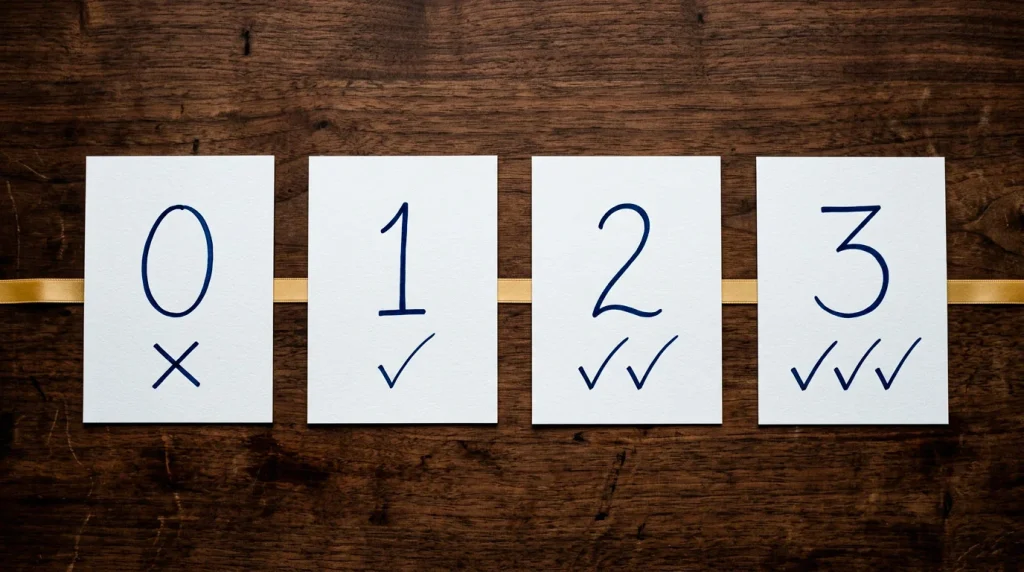
A round robin has four possible outcomes: zero winners, one winner, two winners, or all three. Each produces a different return profile, and knowing what to expect from each scenario — before the first race runs — lets you evaluate the bet with clear eyes. This is every outcome on one page, calculated at fixed odds of 3/1 (A), 5/2 (B), and 4/1 (C) with a £1 unit stake and £10 total outlay.
Round Robin Scenarios — More on this topic at horse racing round robin.
Scenario: All Three Win
This is the dream result. Every component fires: three doubles, the treble, and all six SSA pairs.
Double AB: £1 × 4.00 × 3.50 = £14.00. Double AC: £1 × 4.00 × 5.00 = £20.00. Double BC: £1 × 3.50 × 5.00 = £17.50. Treble: £1 × 4.00 × 3.50 × 5.00 = £70.00. SSA pairs collectively return approximately £44.00 (each directional pair generating leftover profit from the first leg plus the second-leg return).
Total return: £165.50. Profit: £155.50.
The treble contributes 42 percent of the total — the single largest component. The doubles add 31 percent. The SSA pairs contribute 27 percent. This distribution shifts with the odds: longer prices inflate the treble’s share; shorter prices push weight towards the doubles.
How often does this happen? Favourites in British racing win around 30 to 35 percent of the time, according to GrandNational.fans. At our example odds, the implied probability of all three winning simultaneously is roughly 4 to 5 percent. Expect the all-win scenario once in every twenty to twenty-five round robins — a welcome windfall, not a reliable income stream.
Scenario: Two Winners, One Loser
This is the round robin’s sweet spot — the scenario that justifies the bet’s existence. Suppose A and B win, C loses.
Double AB pays £14.00. Doubles AC and BC lose (both include C). Treble loses (includes C).
SSA A→B: A wins, profit £3. Fund £1 single on B. B wins, returns £3.50. Total: £2 + £3.50 = £5.50. SSA B→A: B wins, profit £2.50. Fund £1 single on A. A wins, returns £4.00. Total: £1.50 + £4.00 = £5.50. SSA A→C: A wins, profit £3. Fund £1 on C. C loses. Retained: £2.00. SSA C→A: C loses, no trigger. Lost £1. SSA B→C: B wins, profit £2.50. Fund £1 on C. C loses. Retained: £1.50. SSA C→B: C loses, no trigger. Lost £1.
Total return: approximately £33.50. Profit: approximately £23.50.
The single surviving double delivers the headline return. The SSA pairs between the two winners add a meaningful supplement. The SSA pairs involving the loser produce small recoveries (retained profit from the winning first leg) or nothing (when the loser was the first leg). This is a profitable afternoon. Not spectacular, but comfortably in the black.
Note that which pair wins affects the numbers. If A and C win instead (at 3/1 and 4/1), the surviving double pays £20 and the total return climbs to roughly £40. If B and C win (5/2 and 4/1), the double pays £17.50 and the total sits around £36. The round robin rewards the outcome where the higher-priced selections both land.
This variability within the two-winner scenario is important for expectations. The range of possible two-winner returns runs from around £33 (when selections A and B win) to around £40 (when the two most expensive selections win). All of these are profitable results from a £10 outlay, but the spread is wide enough to feel meaningfully different on the day.
Scenario: One Winner Only
One winner kills all three doubles and the treble. The only active components are the SSA pairs where the winner is the first leg.
Suppose only A wins (at 3/1). SSA A→B: A wins, profit £3. Fund £1 on B. B loses. Retained: £2. SSA A→C: A wins, profit £3. Fund £1 on C. C loses. Retained: £2. SSA B→A: B loses, no trigger. Lost £1. SSA C→A: C loses, no trigger. Lost £1. SSA B→C: B loses, no trigger. Lost £1. SSA C→B: C loses, no trigger. Lost £1.
Total return: approximately £4. Loss: approximately £6.
The round robin does not break even with one winner at these odds — it softens the blow. Compared with a Trixie at £4 outlay (which returns nothing with one winner) or a treble at £1 (also nothing), the round robin’s SSA structure recovers 40 percent of the total stake. You still lose money, but less of it.
If the sole winner had been C at 4/1, the SSA pairs originating from C would retain larger leftover profits (£3 per triggered pair instead of £2), pushing the total return to approximately £6 — still a loss, but a smaller one. If B at 5/2 is the sole winner, the return falls between the A and C figures. The higher the winner’s odds, the better the one-win recovery.
A pattern emerges: the one-winner scenario always produces a loss, but the size of that loss depends on which horse won. Backing one long-priced selection alongside two shorter ones means the round robin loses less when the longshot is the sole winner — a useful property if you tend to include one speculative pick in your three-horse selection.
Scenario: Zero Winners
Nothing fires. All ten components lose. Total return: £0. Loss: £10.
This is the worst case and it is absolute — no partial recovery, no SSA cushion, no consolation. The entire outlay is gone. A round robin cannot protect you when none of your selections win, and in this respect it performs identically to every other bet type: a Trixie at £4, a Patent at £7, a treble at £1 — all return zero with zero winners. The round robin simply costs more to arrive at the same empty result.
Research by Philip Newall at the University of Bristol underscores why this outcome is more frequent than it might feel: the house edge on complex wagers runs many times higher than on simple bets. During the 2014 World Cup, average bookmaker margins were approximately 5 percent on match-winner bets but reached 48 percent on first-goalscorer bets (Newall, 2015, Judgment and Decision Making). That disparity means the true probability of each horse losing is slightly higher than the odds imply. Across three independent events, those small probability adjustments compound, making the zero-winner scenario a touch more likely than a naive reading of the odds would suggest.
At our example odds, the probability of zero winners is roughly 25 to 30 percent — the most likely single outcome. Two-from-three and one-from-three each occur around 30 to 35 percent of the time. All three winning is the least likely at 4 to 5 percent. The round robin is built to perform best in the second-most-likely scenario (two winners) and to salvage something from the third (one winner). It cannot help you when none of your horses finish in front.
| Scenario | Total Return | Profit / Loss | Approx. Frequency |
|---|---|---|---|
| 3 winners | £165.50 | +£155.50 | ~5% |
| 2 winners | ≈ £33–£40 | ≈ +£23–£30 | ~30–35% |
| 1 winner | ≈ £4–£6 | ≈ –£4 to –£6 | ~30–35% |
| 0 winners | £0 | –£10 | ~25–30% |
Summary
Every outcome on one page: £155 profit at best, £10 loss at worst, and a profitable middle ground when two of your three selections deliver. The round robin earns its keep in the two-winner scenario, softens the one-winner blow, and offers no protection when the entire card goes against you.
Knowing these figures before you place the bet removes the element of surprise. The treble is a bonus. The doubles are the engine. The SSA pairs are the cushion. And the blank day — zero winners, full loss — is statistically the most common single outcome. Plan accordingly.
